
How Long Does a Newborn Photo Session Take? (Orange County Photographer)
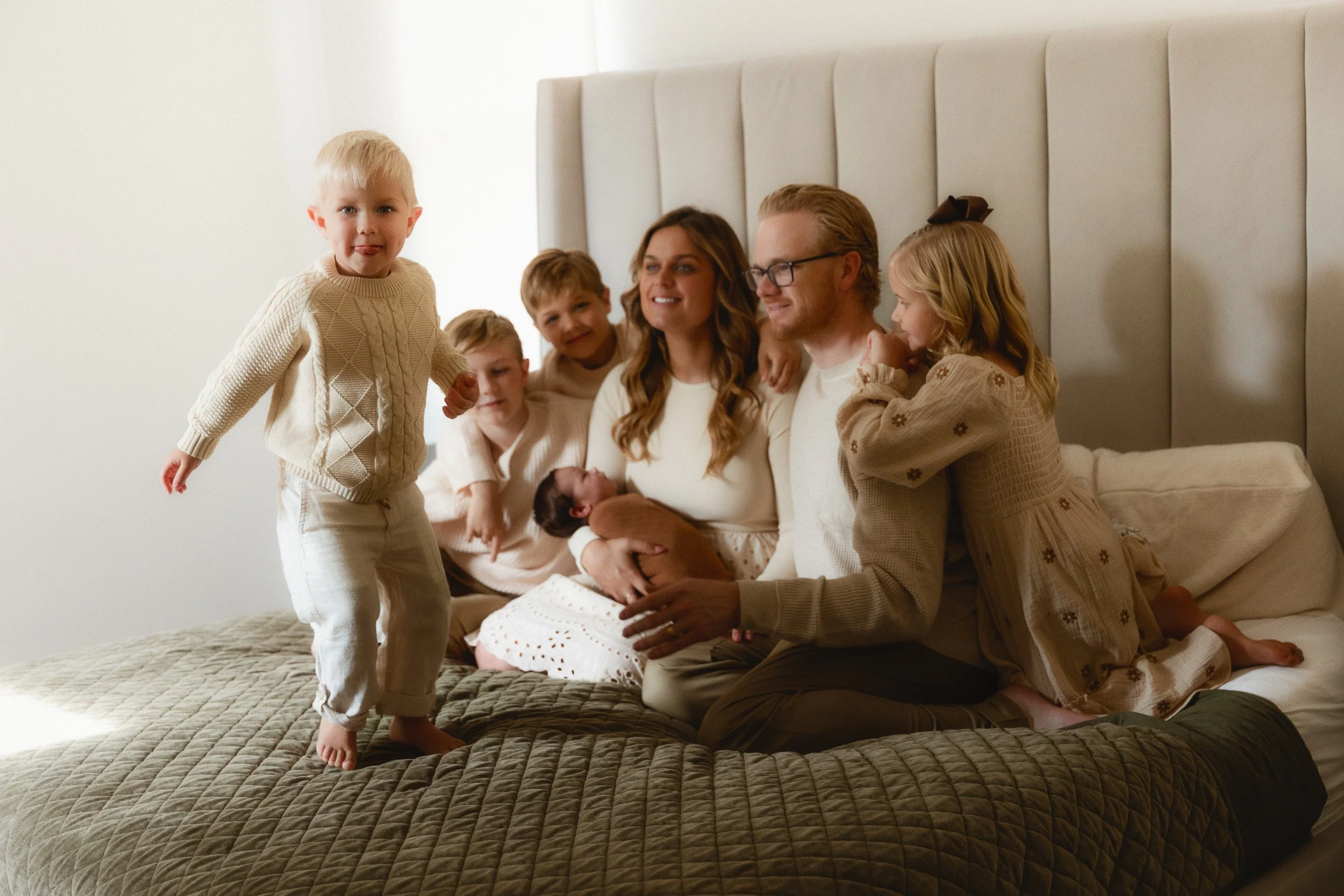
Most newborn photo sessions take between one and two hours. That's the short answer, and if that's all you came here for, you have it.
But that timing is more interesting than it sounds, because the way the time is used is the actual story. A newborn session is not a one-hour photo shoot with a fifteen-minute setup. It's a one-to-two-hour window paced entirely around your baby, which means some sessions wrap in seventy minutes and some take the full two hours. Both are completely normal. Here's what actually determines the length, and what to expect on the day.
Why most newborn sessions run one to two hours
A newborn session needs to be long enough to allow for the things newborns do, which is mostly eat, sleep, cry, and fill diapers. If we tried to compress that into thirty minutes, we'd spend the whole session rushing your baby, and rushed photos of fussy babies are not the photos you want.
One to two hours gives us room. Room to feed without timing it. Room to soothe. Room to wait for that moment when the baby finally settles into your chest and falls asleep, which is often the photo of the entire gallery. The time is the point.
Some sessions take a little less. Some take a little more. The exact length depends on a handful of real factors.
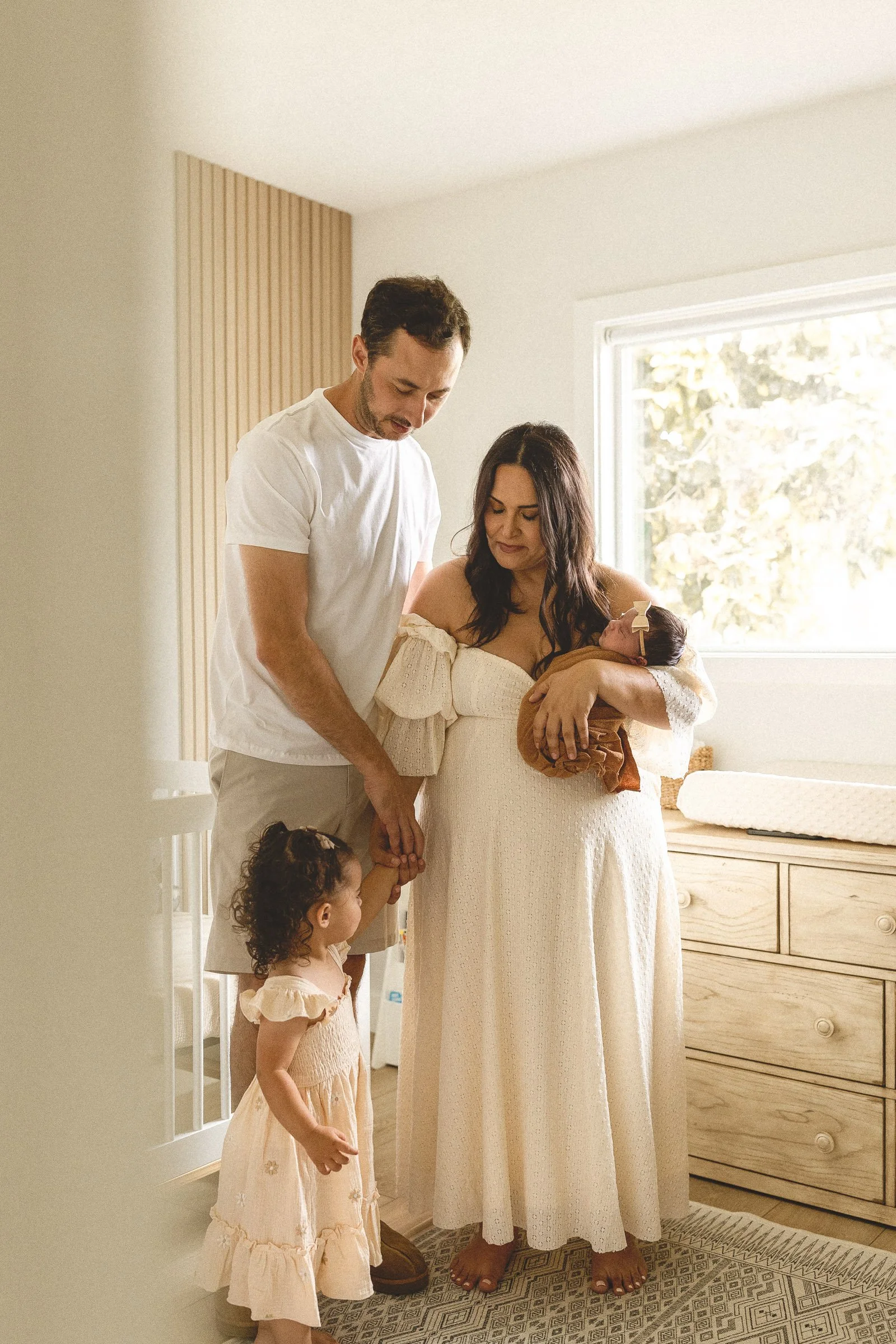
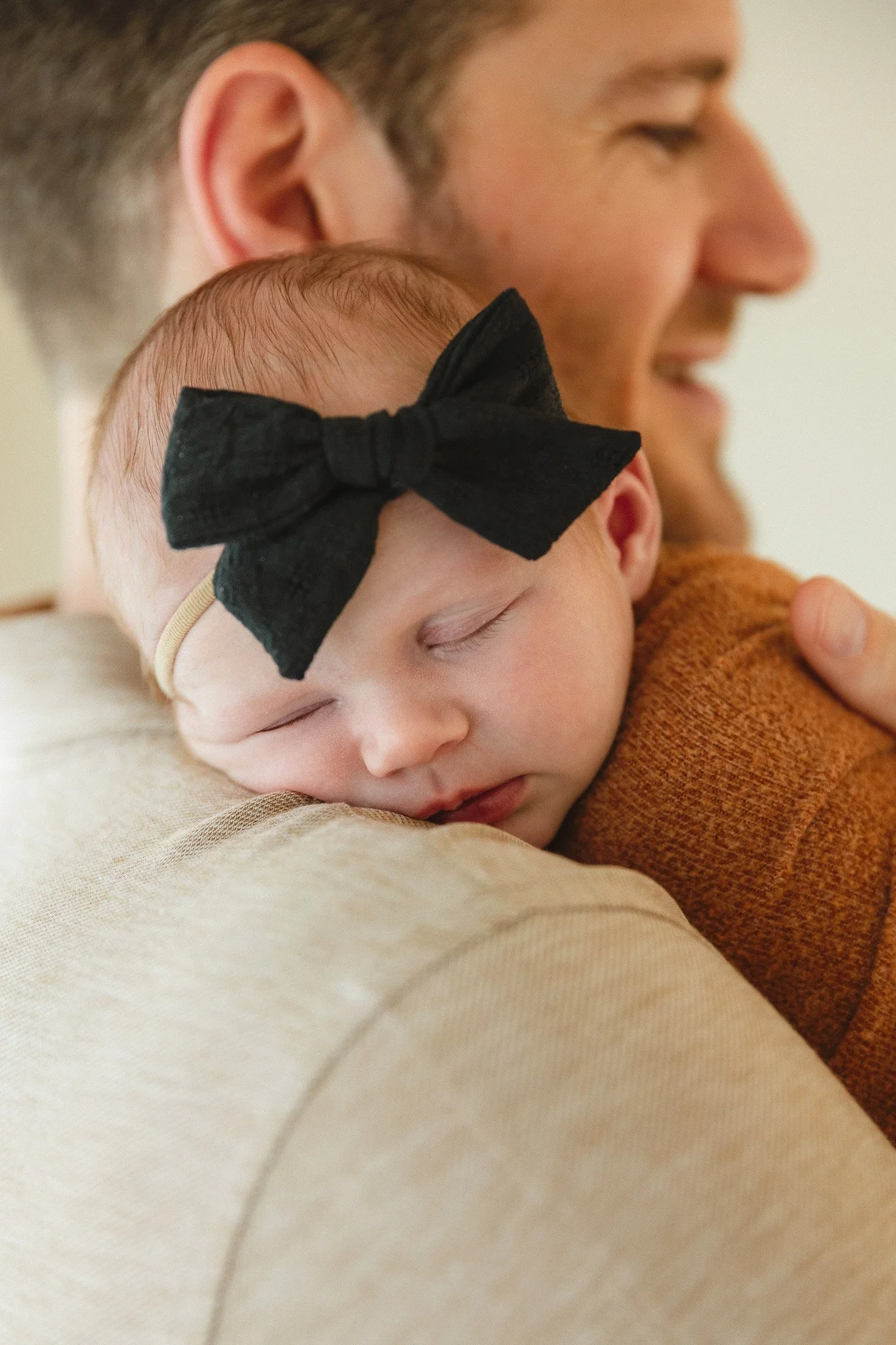
What actually affects session length
Feeding breaks. This is the biggest variable by far. A baby who feeds every two hours is going to need at least one feed during the session, sometimes two. That feed might take fifteen minutes or it might take forty-five. We work around it.
Soothing time. Babies are not robots. Some days they settle immediately. Some days they're fussy from the moment you put them down. Soothing time is part of the session, not an interruption to it. The most peaceful photos almost always come right after a stretch of fussiness, once the baby gets back into a parent's arms.
Older siblings. If you have a toddler or older child participating, we usually capture sibling shots first, while they're at their freshest. This adds maybe ten or fifteen minutes to the beginning of the session, but it pays off in better participation. After sibling photos, the older child can go play, watch a show, or take a nap, and we focus on baby.
Diaper changes. It happens, and it's fine. I work in moments where you can change the baby without me needing to direct anything. Sometimes a diaper change is what wakes the baby up enough for a few really beautiful awake-baby shots right after.
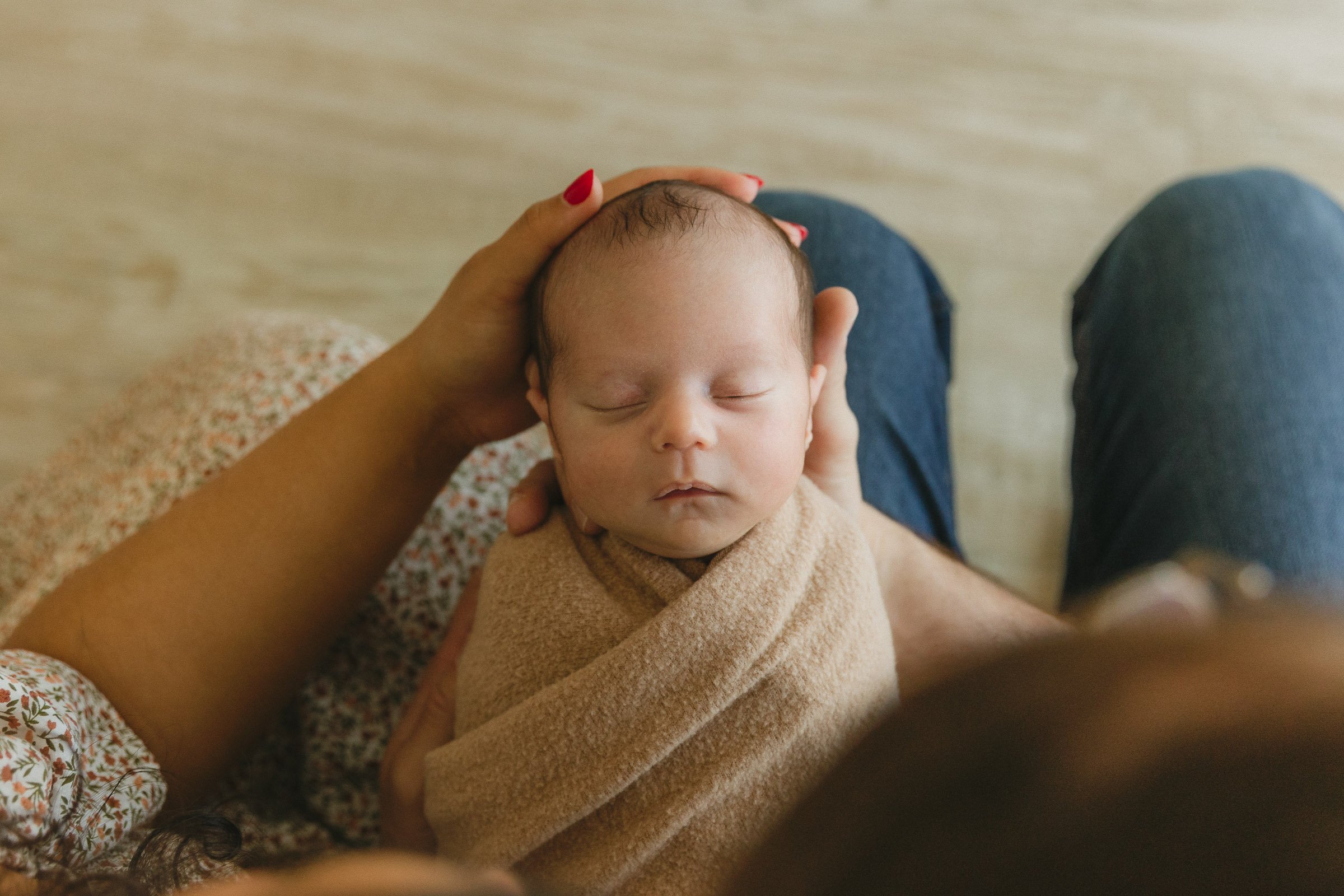
Time pressure ruins newborn photos
This is a strong opinion I hold and I won't soften it. Rushing a fussy newborn does not produce good photos. It produces tense parents, an overstimulated baby, and a gallery full of photos that look like everyone in them wished they were somewhere else.
If a photographer is moving fast because of the clock, you can see it in the photos. The baby's hands are clenched. The mom's shoulders are tight. The expressions are forced.
A one to two-hour session paced around your baby produces softer photos because the baby is actually settled, the parents are actually relaxed, and nothing is being forced.
Your baby sets the pace, not the schedule
The way I structure newborn sessions is what's often called baby-led. The baby decides when we move, when we pause, and when we transition between setups. I'm watching for cues. Is the baby drowsy and about to settle? Is the baby hungry and about to scream? Is the baby content and ready for a few minutes of activity?
This is why two newborn sessions back-to-back can look completely different in terms of pacing. One baby might sleep through the entire session. Another might be awake the whole time. Neither one is a problem. Both produce beautiful galleries, just different ones.
What I will not do is push through a baby who is telling me they need a break. That's where time pressure starts to leak into the photos, and once it's there, you can't edit it out.
First-time parents often expect it to be shorter
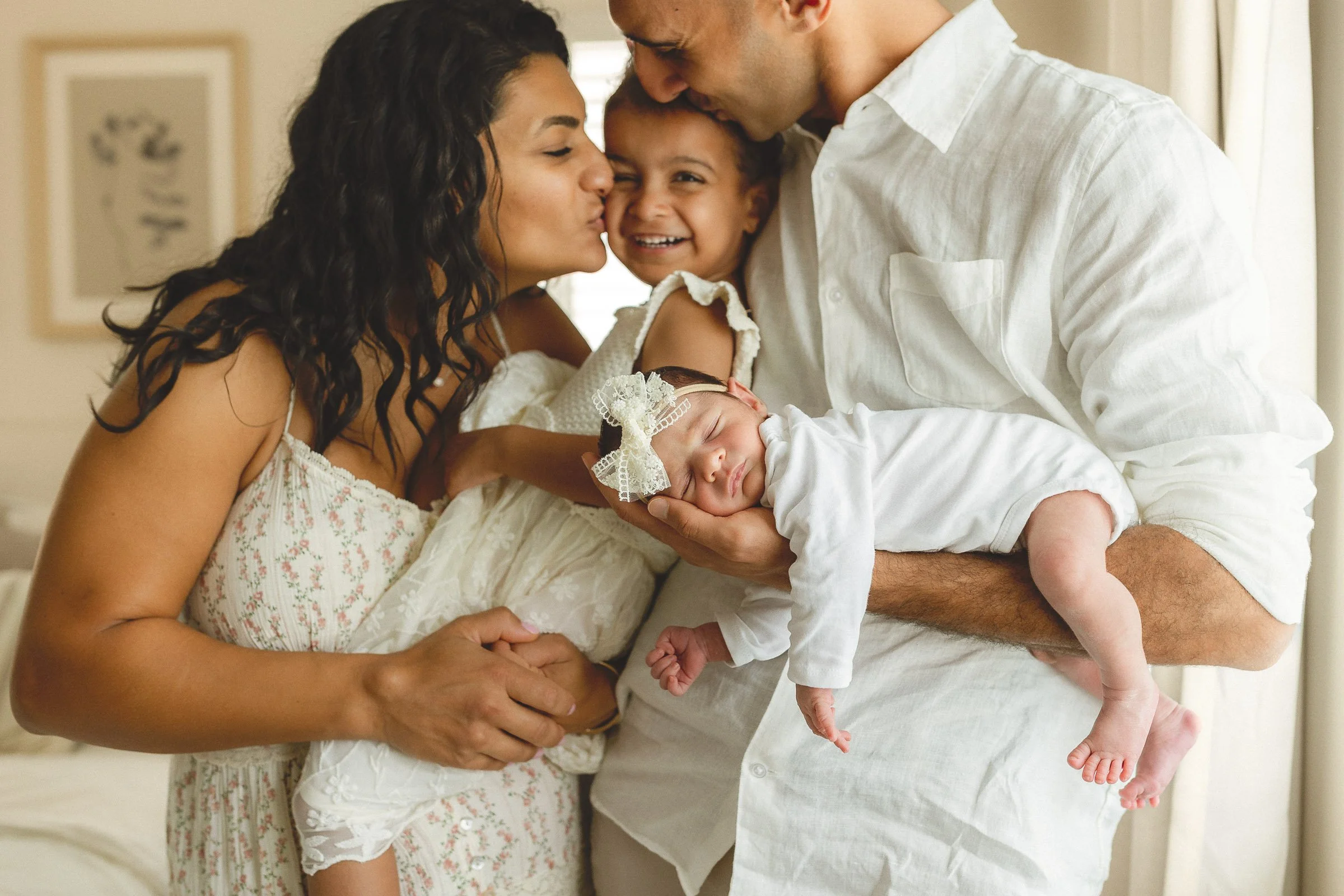
If this is your first baby, you might be reading "one to two hours" and feeling a little intimidated. That's normal. Most first-time parents I work with say afterward that they thought it would be more like thirty minutes, and they were surprised how relaxed the longer window actually felt.
Veteran parents, on the other hand, tend to walk in already knowing. They've done the math on how long it takes to feed and soothe a newborn in real life, and the one to two hour window makes sense to them immediately.
If you're nervous about the time commitment, the thing to remember is that you are not "on" for that entire window. You don't need to perform or smile or pose for two straight hours. Most of the session is you holding your baby and being yourself. That's the photos.
What happens if we run long or short
If your baby is having a really hard session and we're forty-five minutes in with nothing usable, we'll pause. We might break for a longer feed. We might let baby reset in their bassinet for ten minutes. We might shift to sibling and detail shots while you take a beat. We don't end early because of fussiness. We work through it.
If your baby is a dream and we're done in sixty minutes, that's also fine. I don't pad time with bad photos just because there's space on the clock. If we have what we need, we wrap. The gallery doesn't get any better because of an extra twenty minutes of forced shots.
Studio vs. in-home doesn't change the timing much
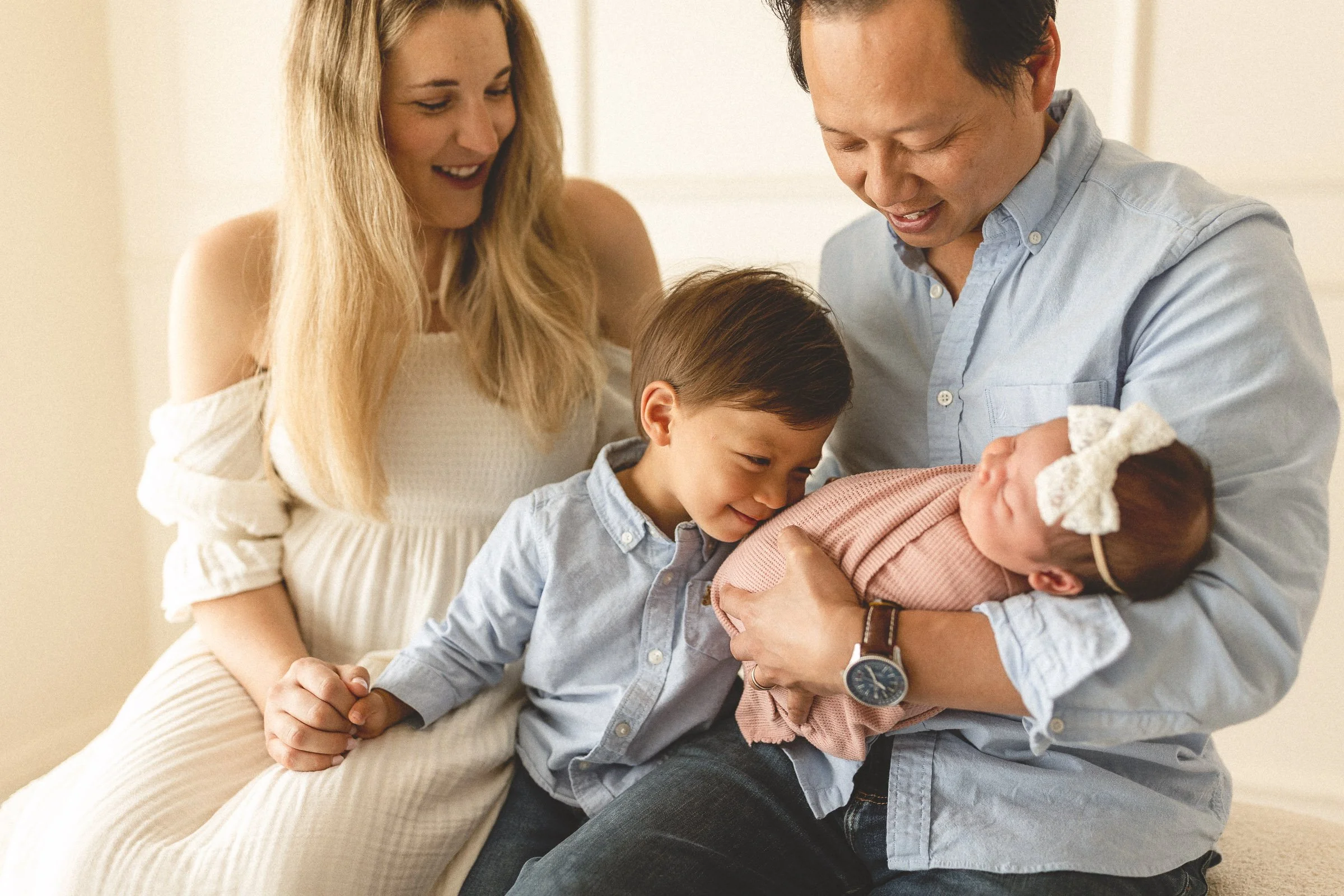
People sometimes assume in-home sessions take longer because there's no controlled environment. The opposite is usually true. In-home sessions tend to be slightly shorter because you don't have to travel anywhere, settle into an unfamiliar space, or pack your baby in and out of a car seat at the start and end.
Studio sessions add about ten to fifteen minutes for parking, walking in, getting settled, and the reverse on the way out. Once the actual shooting starts, the timing is similar. If you're weighing the two, the location choice comes down to other factors than time.
How to plan for your session
The most useful thing you can do before your newborn session is not try to schedule it around a specific feed window. Babies in the first three weeks are unpredictable enough that planning to start "right after she eats at 11 AM" rarely lines up. Instead, plan a window that gives us flexibility. Late morning to early afternoon is typically best. Eat something beforehand, have water nearby, and let go of the schedule once we start.
If you want more on what to expect during a session and how the pacing actually feels in practice, you can see the full structure of my Orange County newborn photography sessions.