
What to Expect During Your Session
Your session is 2 hours, fully baby-led, and built around exactly what your baby is doing. You don't need to memorize anything before you arrive.
This guide walks through the three things that shape every newborn session — the pacing, how you'll be guided, and what you'll actually leave with.
01 · Baby-Led Pacing
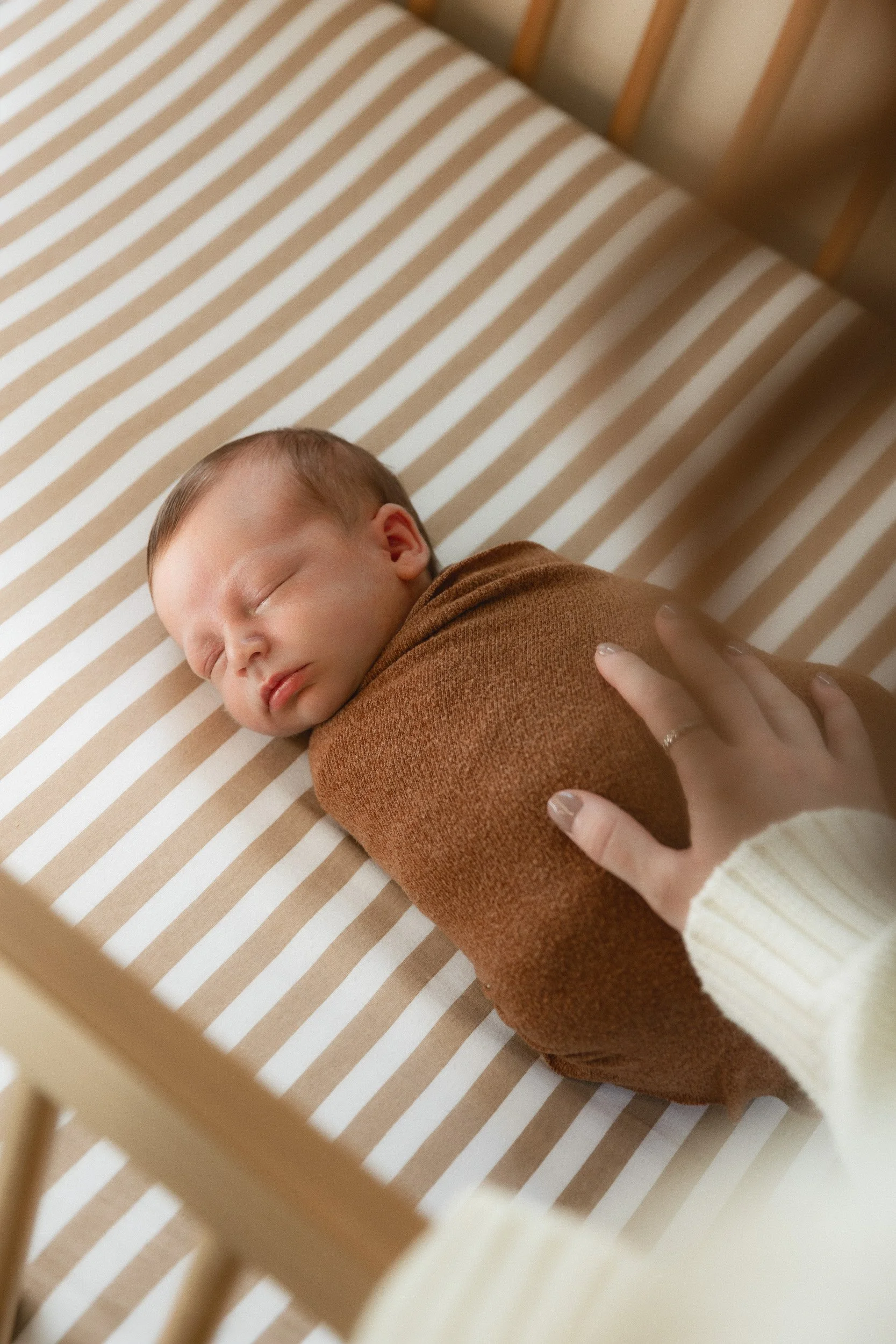
Your session is up to 2 hours, and the flow shifts based on what your baby is doing. Asleep and content? We lean into quieter posed-style images. Awake and alert? We capture those wide-eyed moments. Hungry? We pause. Fussy? We pause. That's the whole point of building in 2 hours instead of one.
What this looks like in practice:
The first few minutes are settling in. Coats off, baby gets checked on, you take a breath. Nothing starts on a stopwatch.
Feeding can happen whenever. Whether you nurse or bottle-feed, we work around your baby's hunger cues, not the other way around.
Diaper changes are part of the flow. So are blowouts. So are spit-ups. None of it throws the session off.
If baby is having a harder day than expected, we stretch into the full 2-hour window. If everything clicks fast, we wrap early.
A note for first-time parents: If you've never done a newborn session, the pacing can feel surprising — slower than you'd expect, more conversational, more breaks. That's intentional. Rushed newborn sessions photograph rushed.
02 · Guided, Not Stiff
You don't need to know how to pose. You don't need to memorize anything ahead of time. You don't even need to know what "good lighting" looks like. My job is to handle every part of that.
What this looks like in practice:
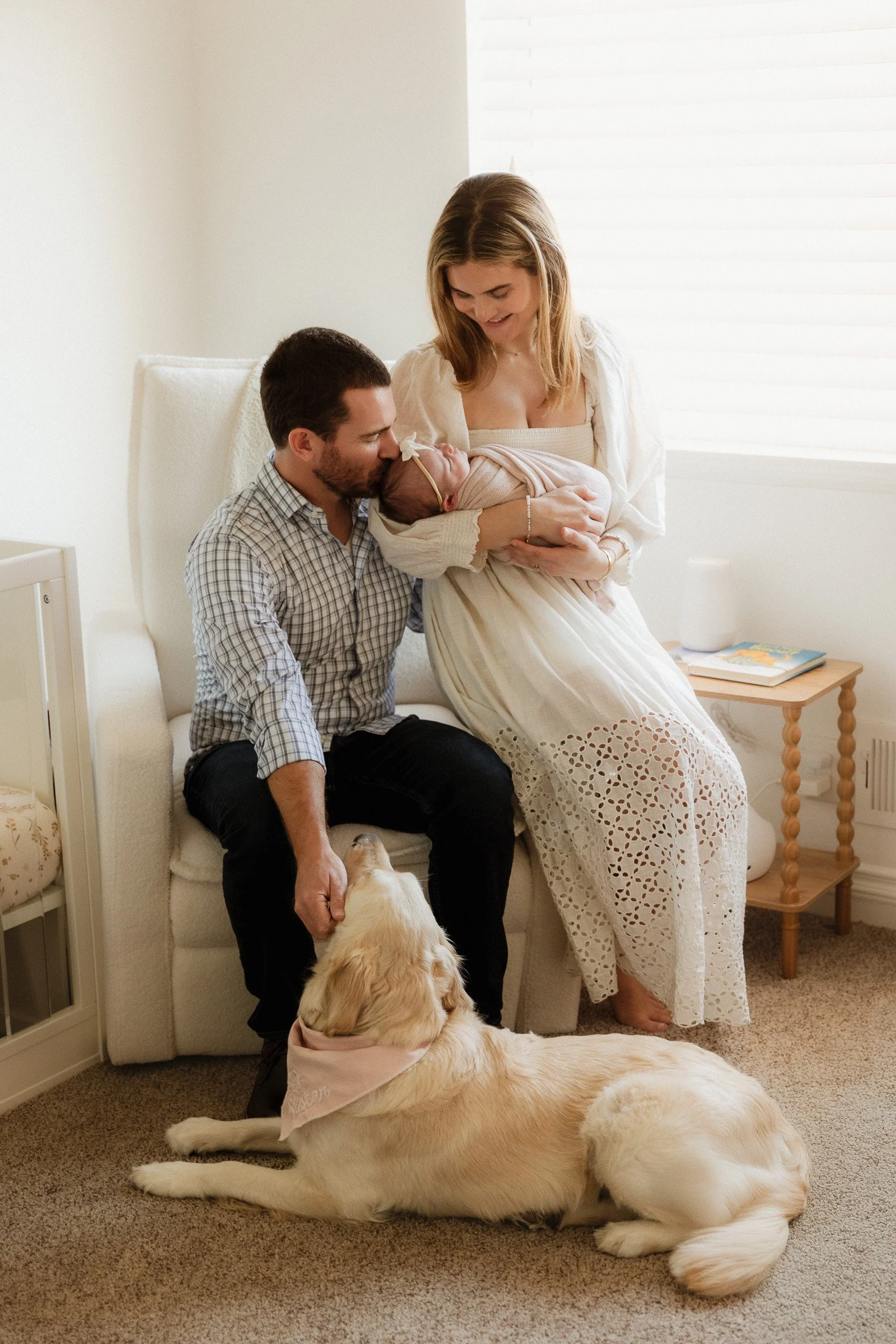
I'll tell you where to sit, where to stand, where to look. You don't have to figure any of it out.
Posing is gentle and natural. No contorted hand placement, no awkward staring at the camera, no fake laughter.
For the candid moments, I'll prompt you. Things like "tell baby what you were thinking when you first saw them" or "show your toddler the baby's tiny feet." Real reactions, not forced ones.
If something feels off — uncomfortable, awkward, not you — say so. The session adjusts to you, not the other way around.
A note on photographing yourself postpartum: Almost every mom comes in worried about how she'll look. Posing handles a lot of this. I'll guide you in ways that flatter where your body is right now, not where you wish it was. You'll feel it during the session.
03 · A Hybrid Gallery
You'll leave with two kinds of images.
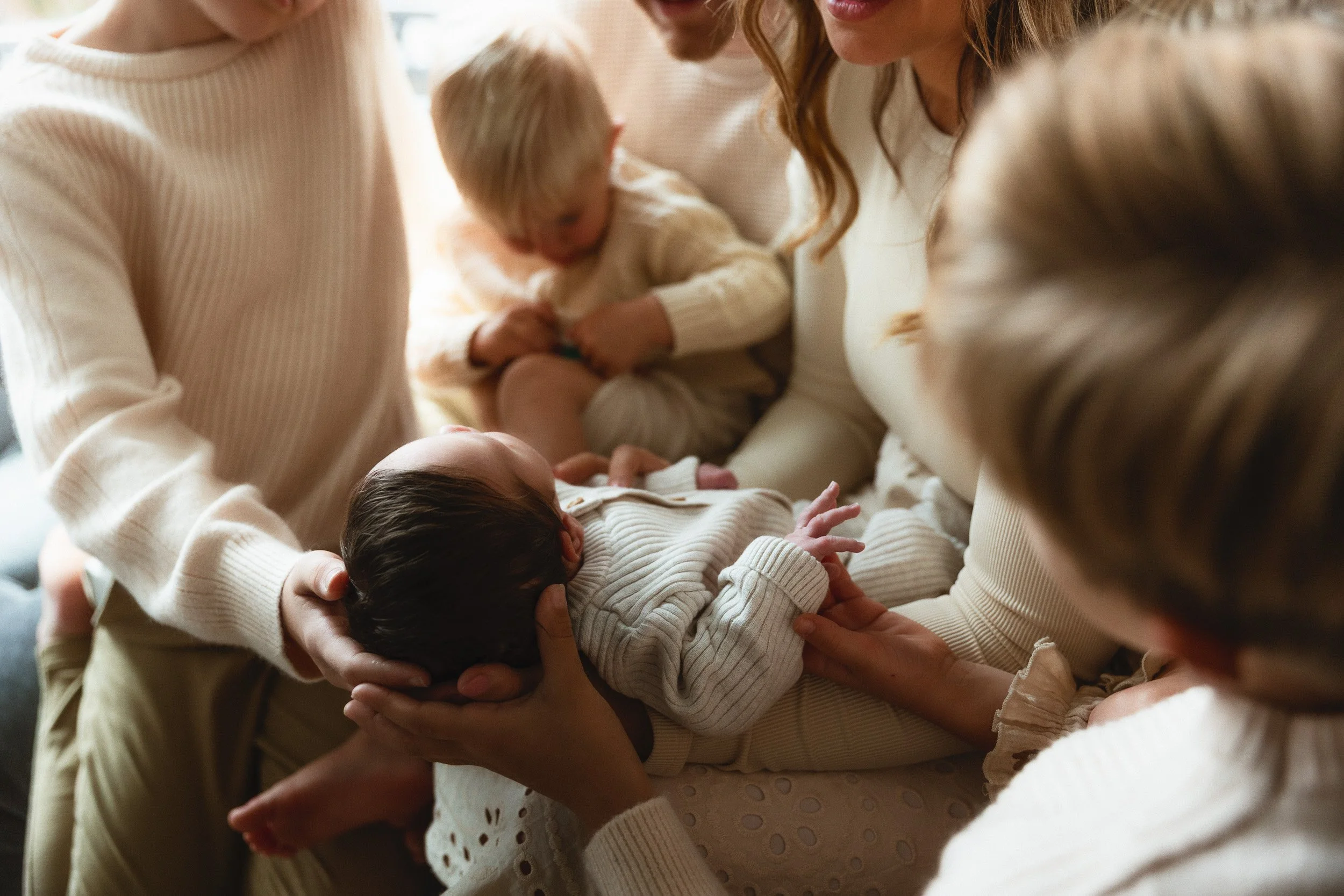
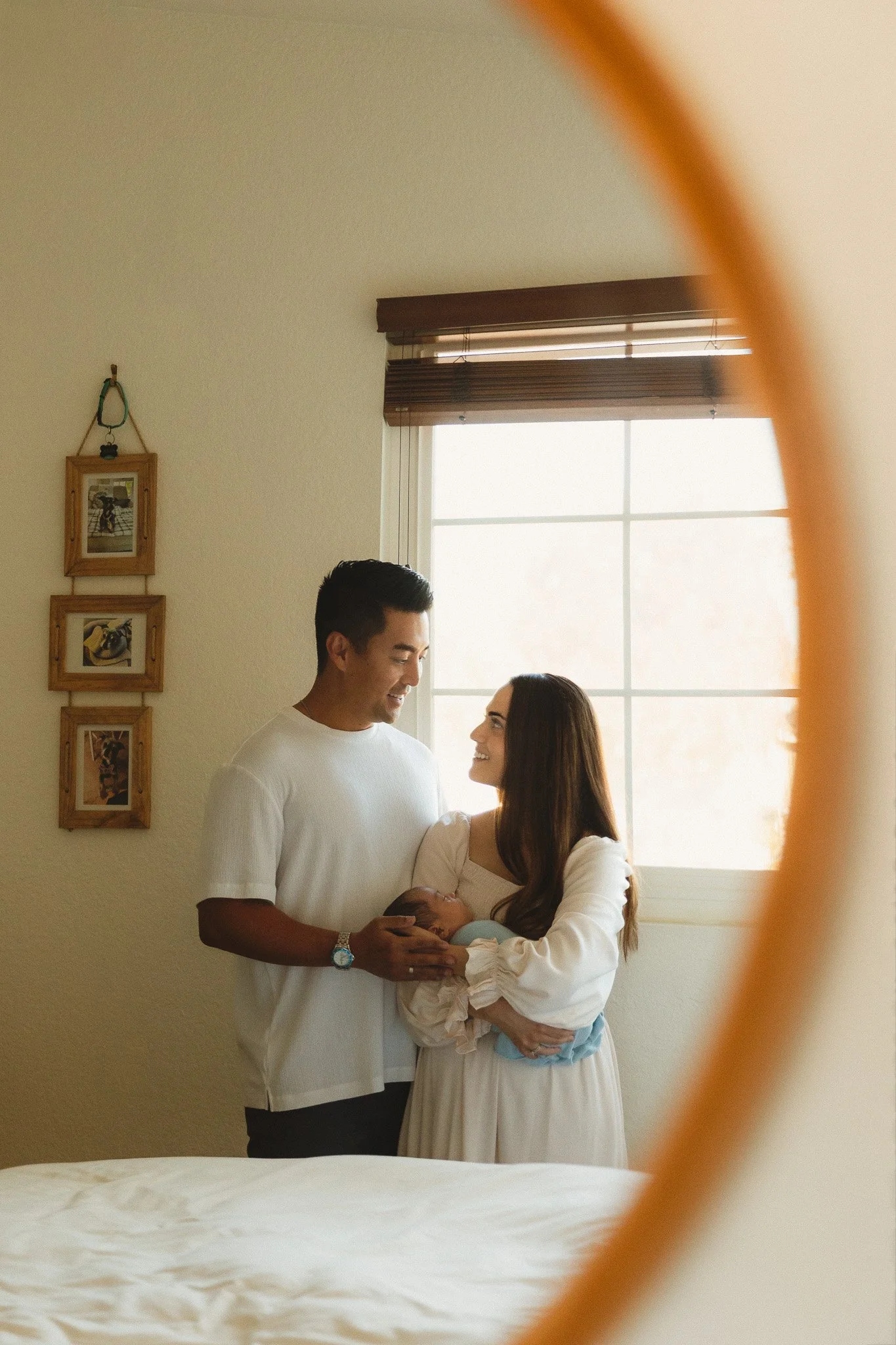
Classic portraits — the ones that look great printed on the wall. Baby alone in soft wraps and neutrals. Baby with each parent. Family together. Sibling shots if you have older kids. These are the photos that go on the wall, in the album, on your parents' fridge.
Real, in-between moments — the ones you'll come back to most. You looking at your baby. Your partner's hand on baby's back. Your toddler trying (and failing) to whisper. The way your dog comes to check on the baby. The candid, connected moments that aren't posed but somehow tell the truer story.
What this looks like in practice:
Most galleries land between 60 and 90+ edited images
A mix of color and select black-and-white edits where it fits
Delivered as an online gallery you can download, share, and order prints from
Delivery timing depends on your package: 3 weeks (Essential), 2 weeks (Signature), or 1 week (Premium)